Why should you let your current people tell the story - from their lens - to your future employees.
Better hiring quality · stronger culture visibility · measurable follower growth · positive business outcomes
A few challenges my previous employers faced. Poor quality profiles for open roles. Long TAT for closing critical positions. Little to zero employee NPS. And the classic saga of drop-outs on joining day.
Well, 50% of this was linked to how future employees perceive the brand through a prospect's lens. Most companies treat employer branding as an afterthought — a careers page, a few job posts, and a generic "we're hiring" LinkedIn update. The real challenge is different: candidates are forming opinions about your company long before anyone reaches out. If you're not shaping that narrative — or the only thing your future employee sees is one bad review on Glassdoor or AmbitionBox — you've already lost the case.
Across Circle Health and Needle, I built employer brand programmes from scratch. Each one started with the same problem: strong internal culture, zero external visibility.
Employer brands aren't built with one-day campaigns. They're built with stories — consistent, specific, human, honest ones. My first instinct was to talk to employees — from founding team members to relatively new joiners — understand their perspectives, find the stories that had a possibility to move the needle, get them to tell it in their own voice, and put it where the right people would find it.
Story finding and scripting
Spoke to founders, core team members and employees across levels to find the relevant stories. Prepped them to be able to deliver. Designed each piece in the subject's own voice — not a polished storytelling format, not an HR template, but the from-heart ones you'd actually want to listen to.
Content formats
A mix of short video content, written profiles, LinkedIn posts and Medium articles. Everything was treated as culture content, not recruitment content — which made it more believable and meant it travelled further.
Sustained cadence
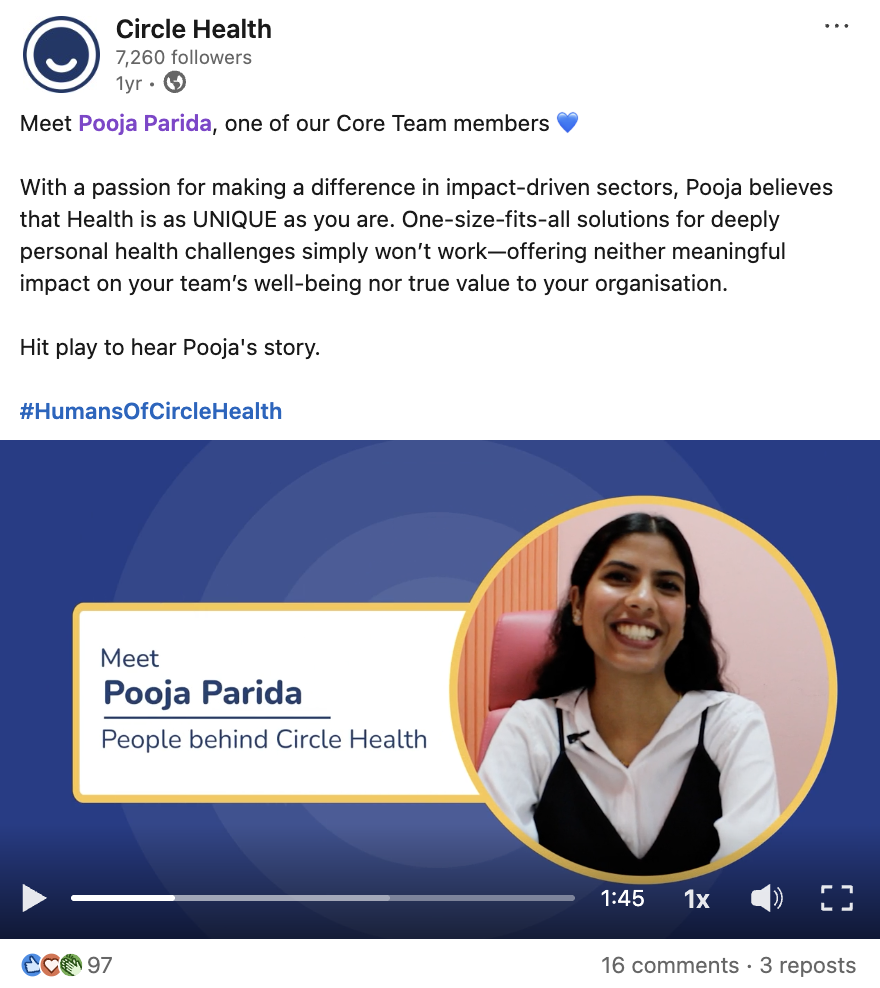
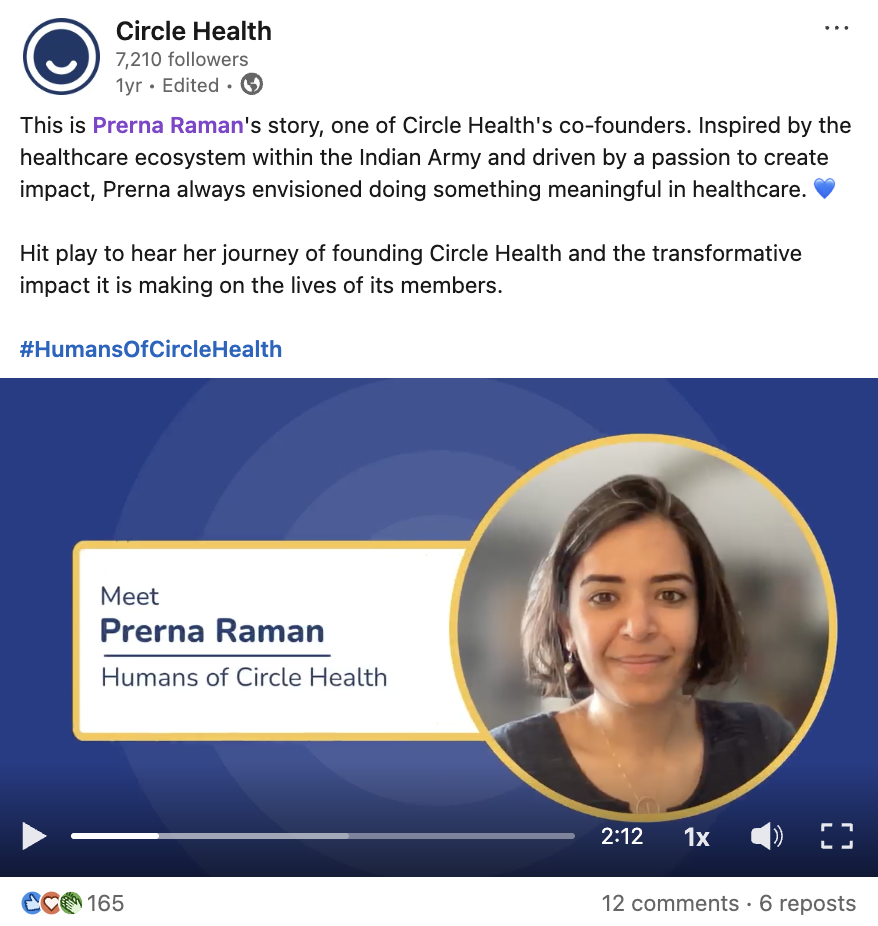
Both series ran consistently over several months. Each story added to a cumulative picture of what the company was actually like from the inside. At Needle, this included the Life at Needle Medium publication — a space for honest writing about startup culture, failure, growth and people. At Circle Health, it was the Humans of Circle Health video series.
Distribution
LinkedIn company pages, founder profiles, Medium, WhatsApp communities and internal Slack channels.